Reading and Writing About Short Story Summary Page 3
Knowing exactly how to write a short story is not ever obvious to even the most seasoned readers. So whether you're looking to write a short story that will get you lot published, win a prize, ace your school assignment, or merely impact the center of a single reader, we've got yous covered.
Hither'southward a simple 6-step procedure for writing a brusque story.
- Pace 1. Identify a short story idea
- Step 2. Understand the structure and goal of your short story
- Stride iii. Hook readers with a beginning that introduces the characters
- Footstep 4. Don't write a curt story as you lot would write a novel
- Pace v. Stop the story with a bang
- Pace 6. Edit, edit, and edit the draft
Step by footstep, we'll show you how to have a blank page and spin information technology into brusk-form narrative aureate.
Step 1. Place a short story idea
Before you can put your caput downwardly and write your story, you get-go need an thought you can run with. Some writers can seemingly pluck interesting ideas out of sparse air only if that's non you, then fright not. Here are some tips and tricks that will get your artistic juices flowing and have you drumming upwards ideas in no time.
Start with an interesting grapheme or setting
Short stories, by their very nature, tend to be narrower in telescopic than a novel. At that place'south less pressure level to have a rich narrative mapped out from A to Z earlier your pen hits the paper. Short story writers often detect it fruitful to focus on a single character, setting, or upshot — an approach that is responsible for some true classics.
John Cheever's "The Swimmer" is well-nigh one grapheme: a suburban American begetter who decides to swim through all of his neighbor's pools. While Shirley Jackson's "The Lottery" has a larger bandage of characters, the story takes place perhaps over one hr in a town square. Past limiting yourself to a few characters and one or two locations, you may detect information technology easier to keep your story from getting out of mitt and spiraling off into tangents.
Mine your own anecdotes
When it comes to establishing a story's premise, real-life experiences tin be your first port of call — "write what y'all know", equally the erstwhile adage goes. While you lot might non have lived through an ballsy saga akin to Gulliver's Travels, you probably take an anecdote or two that would hands grade the basis of a short story. If in that location's a funny story you ever reach for at a party or a family unit dinner, you lot could repurpose for a piece of writing or let information technology serve equally a launchpad for your imagination.
Eavesdrop and steal
In that location is beauty in the mundane. Writers these days often have a document open in their phone's notes app to remember things that might spark their imagination at a later date. After all, something y'all overhear in a conversation between your aunties could be perfect curt story provender — every bit could a colorful character who turns upwards at your workplace. Whether these experiences are the ground for a story or office every bit a minor piece of embellishment, they tin save your imagination from having to practice all the heavy lifting.
It'due south not but your ain life you can take inspiration from either. Pay actress attending to the news, the stories your friends tell you lot, and all the things that become on around — it will surely serve yous well when it comes to brainstorming a story.
Try a writing prompt on for size
If y'all're nevertheless stumped, looking through some short story ideas or writing prompts for inspiration. Any stories that are written with these resources are however your intellectual holding, and so you tin freely share or publish them if they turn out well!
Once you take your idea (which could be a setting, character, or event), try to associate it with a strong emotion. Think of short stories as a study of feeling — rather than a full-blown plot, you can home in on an emotion and allow that dictate the tone and narrative arc. Without this emotion cadre, you lot may find that your story lacks bulldoze and volition struggle to engage the reader.
With your emotionally charged thought set up to go, let's look at construction.
Step two. Empathise the structure and goal of your short story
You might be tempted to apply standard novel-writing strategies to your story: intricately plotting each event, creating detailed grapheme profiles, and of class, painstakingly mapping information technology onto a popular story framework with a start, middle, and end. But all you really need is a well-developed primary character and one or two big events at most.
Curt stories should accept an inciting incident and a climax
A curt story, though more than concise, can notwithstanding take all of the narrative components we'd expect from a novel — though the set up, inciting incident, and climax might but be a sentence or two. As Kurt Vonnegut would say, writers should aim to start their stories "as close to the end equally possible". Taking this advice to the extreme, you could begin your story in medias res, skipping all exposition and starting in the middle of the action, and sustaining tension from there on in.
What'due south most important to recollect is that short stories don't have the same privilege of time when it comes to exposition. To save fourth dimension and make for a snappier piece of writing, it's usually better to fold backstory into the rising action.
Each scene should escalate the tension
Another effective short story structure is the Fichtean Curve, which likewise skips over exposition and the inciting incident and starts with rising action. Typically, this part of the story will see the main graphic symbol meet and overcome several smaller obstacles (with exposition snuck in), crescendoing with the climax. This approach encourages writers to craft tension-packed narratives that get direct to the point. Rarely do you want to resolve things in the middle of the story — if there'south an opportunity for tension, leave it open to keep the momentum going until the very end.
Don't be afraid to experiment with structure and course
Curt stories by blueprint don't really accept the time to settle into the familiar shape of a archetype narrative. However, this restriction gives you costless rein to play effectually with chronology and betoken of view — to take risks, and exist experimental. After all, if you lot're only request for 20 minutes of your readers' time, they're more likely to proceed with an unusual storytelling mode. Classic curt stories like Flannery O'Connor's "A Practiced Man Is Hard to Find" did so well precisely because O'Connor redrew the parameters of the S Gothic genre equally it was known — with its cast of characters, artfully sustained suspense and its shocking, gruesome ending.
Step 3. Hook readers with a beginning that introduces the characters
A lot rides on the opening lines of a short story. You'll want to strike the right tone, introduce the characters, and capture the reader's attending all at in one case — and you demand to do it quickly because yous don't have many words to work with! There are a few ways to exercise this, then let's take a look at the options.
Commencement with an activeness
Starting with a blindside — literally and figuratively — is a surefire way to catch your reader'south attention. Action is a peachy fashion to immediately establish tension that y'all can sustain throughout the story. This doesn't have to be something hugely dramatic like a car crash (though it can be) — information technology can exist as small and simple as missing a motorbus by a matter of seconds. And then long as the reader understands that this action is in some style unusual, information technology can ready the scene for the emotional turmoil that is to unfold.
Starting time with an insight
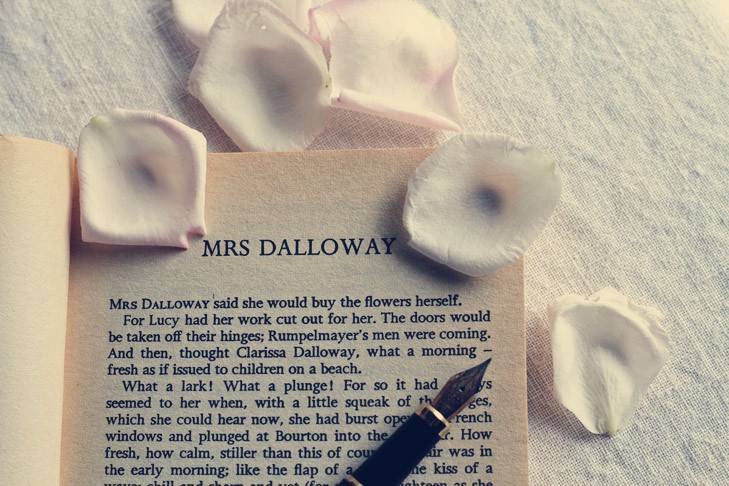
I highly effective method for starting a brusque story is to write an opening claw. A 'hook' can seem an obtuse word, but what it really means is a sentence that immediately garners intrigue and encourages your reader to read on. For example, in "Mrs Dalloway" (originally a curt story), Virginia Woolf opens with the line, "Mrs. Dalloway said she would buy the flowers herself." The reader then wonders: who is Mrs. Dalloway, why is she buying flowers, and is it unusual that she would practice so herself? Such questions prompt the reader to continue with interest, looking for answers.
Commencement with an prototype
Another popular way of opening a story by presenting your reader with a strong image. Information technology could be a description of an object, a person, or even a location. It'due south not to everyone's taste (specially if you love plot driven stories), but when done well, a well-drawn image has the ability to linger on the reader's mind. Allow'due south become dorsum to our case of Shirley Jackson's "The Lottery". This story starts opens with a vivid and detailed description of a hamlet:
The morn of June 27th was clear and sunny, with the fresh warmth of a full-summer day; the flowers were blossoming profusely and the grass was richly light-green.
Though this description seems to be setting the stage for a pleasant, lighthearted tale, "The Lottery" actually takes a darker plough — making this opening prototype of an idyllic summer's twenty-four hour period even more eerie. When this story was published in The New Yorker, readers responded by sending in more messages than for any story that had come before — that's how you know you've made an touch, right?
[PRO-TIP: To read some of the best short stories, head here to discover 31 must-read curt story collections.]
Step iv. Don't write a short story as you would write a novel
The former maxim of "write drunk, edit sober" has long been misattributed to Ernest Hemingway, a notorious drinker. While nosotros exercise not recommend literally writing under the influence, there is something to be said for writing feely with your first typhoon.
🎵
Tell us nearly your volume, and we'll give you a writing playlist
Information technology'll but take a infinitesimal!
Don't edit as you write
Your first draft is not going to exist fit for human being consumption. That'due south not the indicate of information technology. Your goal with version 1 of the story is just to become something out on the page. You should have a clear sense of your story'due south overall aim, then just sit and write towards that aim every bit best you can.
Avert the temptation to noodle with word choice and syntax while you're on the outset draft: that part will come up later. 'Writing drunk' ways internalizing the conviction of someone on their second canteen of chablis. Behave equally though everything you're writing is amazing. If yous brand a spelling mistake? Who cares! Does that sentence make sense? You'll fix that later!
Backstory is rarely needed
Hemingway's Iceberg Theory — correctly attributed to the human — is well suited to brusque stories. Like the physical appearance of an Iceberg, most of which is "under the surface", much can exist inferred nearly your story through a few craftily written sentences. Instead of beingness spoon-fed every unmarried detail, your reader can ponder the subtext themselves and come to their own conclusions. The virtually classic example of this is "For auction: baby shoes, never worn" — a half dozen-give-and-take story with a whole lot of emotionally charged subtext. (Note: that story is attributed to Hemingway, though that claim is likewise unsubstantiated!)
In short, don't second-guess yourself and if your story truly needs more context, it can e'er be added in the next revision.
Footstep 5. End the story with a blindside
Nothing is more disappointing to a reader than a beautifully written narrative with a weak catastrophe. When y'all become to the end of your story, information technology may be tempting to dash off a quick i and be done with it— simply don't give in to temptation! There are countless ways to end a story — and there's no requirement to provide a tidy resolution — but we observe that the most compelling endings will center on its characters.
What has inverse about the graphic symbol?
It'south typical for a story to put a protagonist through their paces as a ways to tease out some kind of character development. Many stories will feature a archetype redemption arc, but it'due south not the only option. The ending might see the main graphic symbol making a option based on having some kind of profound revelation. Characters might change in subtler ways, though, arriving at a specific realization or becoming more contemptuous or hopeful. Or, they might learn admittedly aught from the trials and tribulations they've faced.
In O. Henry'due south Christmas-fix "The Gift of the Magi," a young woman sells her hair to purchase her husband a chain for his pocket scout. When the husband returns habitation that night, he reveals that he sold his sentry to buy his wife a gear up of hair ornaments that she tin now no longer use. The couple has spent the story worrying about material gifts merely in the end, they have learned that real gift… is their love for one some other.
Has our understanding of them changed?
Human beings are innately resistant to change. Instead of putting your characters through a great epiphany or moment of transformation, your ending could reveal an existing truth most them. For example, the ending might reveal that your seemingly likable graphic symbol is actually a villain — or there may be a revelation that renders their morally dubious activeness in a kinder lite.
This revelation tin can also manifest itself every bit a twist. In Ambrose Bierce's "An Occurrence at Owl Creek Bridge," a plantation owner in the Civil War escapes the gallows and embarks on a treacherous journeying domicile. Merely just earlier he reaches his wife'southward waiting arms, he feels a sharp blow on the back of his neck. Information technology is revealed that he never actually left the gallows — his escape was merely a final fantasy.
For these graphic symbol-driven endings to work, the readers demand to exist invested in your characters. With the precious few words that you lot have to tell your story, you need to paint enough of a moving picture to brand readers intendance what really happens to them at the end.
More often than non, if your ending falls flat, the problem ordinarily lies in the preceding scenes and non the ending. Take you adequately set upward the stakes of the story? Have you given readers enough of a clue virtually your twist ending? Does the reader care enough about the character for the ending to have a strong emotional impact? One time you can answer yeah to all these questions, you're set to start editing.
Pace half dozen. Edit, edit, and edit the draft
If you're wondering how to make your story become from good to bang-up, the hole-and-corner'south in the editing process. And the first phase of editing a short story involves whittling it down until it's fighting fit. As Edgar Allan Poe once said, "a short story must take a unmarried mood and every sentence must build toward it,". With this in mind, ensure that each line and paragraph not only progress the story, but also contributes to the mood, cardinal emotion or viewpoint you are trying to express. Poe himself does this to marvelous effect in "The Tell-Tale Center":
Slowly, footling by little, I lifted the material, until a pocket-size, small-scale light escaped from under it to fall upon — to fall upon that vulture middle! It was open — broad, wide open, and my anger increased equally it looked straight at me. I could not see the sometime human'south face. Merely that eye, that difficult blue eye, and the blood in my body became like ice.
Edit ruthlessly
The rewrites will often take longer than the original draft because now you are trying to perfect and refine the central idea of your story. If you accept a panic-stricken await across your face reading this, don't worry, y'all will probably be more aware of the shape y'all desire your story to take one time you've written it, which will make the refining process a little easier.
A well-executed edit starts with a diligent re-read — something yous'll want to practice multiple times to ensure no errors slip through the cyberspace. Pay attention to give-and-take period, the intensity of your central emotion, and the pacing of your plot, and what the readers are gradually learning about your characters. Brand a note of any inconsistencies you find, even if y'all don't think they affair — something extremely minor can throw the whole narrative out of whack. The trouble-solving skills required to identify and ready plot holes will too help you somewhen skim the fat off your short story.
What to exercise if it's too long
Perchance you lot're inbound a writing competition with a strict word limit, or mayhap you lot realize your story is dragging. A unproblematic way to trim your story is to see if each sentence passes the 'and so what?' exam — i.eastward., would your reader miss it if information technology was deleted?
Meet too if there are any convoluted phrases that can be swapped out for snappier words. Do you lot need to describe a '400ft sail-covered, steel-skeleton hydrogen dirigible' when 'massive airship' might suffice?
Get a 2d opinion
Transport your story to another author. Sure, y'all may feel self-conscious but all writers have been embarrassed to share their work at some point in their lives— plus, it could salvage you from making major mistakes. In that location'southward nothing like a fresh pair of eyes to signal out something yous missed. More than one pair of optics is fifty-fifty better!
Consider professional person editing
If you decide to go with a professional editor, it's your lucky twenty-four hour period! Freelance literary editors will work on curt stories for a lot less than they would for novels (from as little as $100 for a story under 5,000 words) — and it's the perfect opportunity to get some experience working with a professional who knows exactly what a great curt story should look like.
Now that you know how to a short story people will want to read, why not become information technology out into the world? In the next mail service in this series, discover your best options for getting your brusque story published.
everinghamwelition.blogspot.com
Source: https://blog.reedsy.com/guide/short-story/how-to-write-a-short-story/
0 Response to "Reading and Writing About Short Story Summary Page 3"
Post a Comment